

A friend tells you she's finally selling the flat, and before you've finished saying "good luck", your knuckles are already against the door frame. You didn't decide to do that. It arrived somewhere in childhood and stayed.
That's how superstitions work: they're inherited gestures, not beliefs you sat down and reasoned your way into. Most are far older than the explanations people give for them, and several travelled through kitchens, shipyards and parish churches before reaching your living room. They also survive because they're cheap: a knock, a pinch, a small detour around a ladder costs nothing and buys a little comfort. Here's the history behind five you probably still follow.
Broken Mirrors: Seven Years and a Very Expensive Accident
The mirror superstition starts with a simple idea: that the thing in the glass is not just light bouncing back, but a piece of you.
Roman writers and later European households treated a reflection as an extension of the person, which made a crack in the glass something more than an accident. Damage the image badly enough and you damaged the person it belonged to. In some traditions, mirrors were covered after a death for the same reason: the soul shouldn't be caught in the glass while it was still finding its way out.
The seven years is the part with the shakiest paper trail. One popular explanation ties it to an old belief that the body renews itself on a seven-year cycle, so a broken mirror meant waiting out a full regeneration before you were whole again. A duller explanation fits just as well: mirrors were once small, expensive and hard to replace. A broken mirror was a genuine loss to a household budget, and families remembered it. There's also a practical edge: broken glass is sharp, and a superstition that makes you careful around it is not the worst idea your ancestors ever had.
Note what that leaves you with today. The glass cracked; the seven years is inherited storytelling about the cost of carelessness. Keep the story. Replace the mirror.
Black Cats: Bad Luck in One Country, Good Luck Next Door
There is no single origin here, because Europe never agreed with itself.
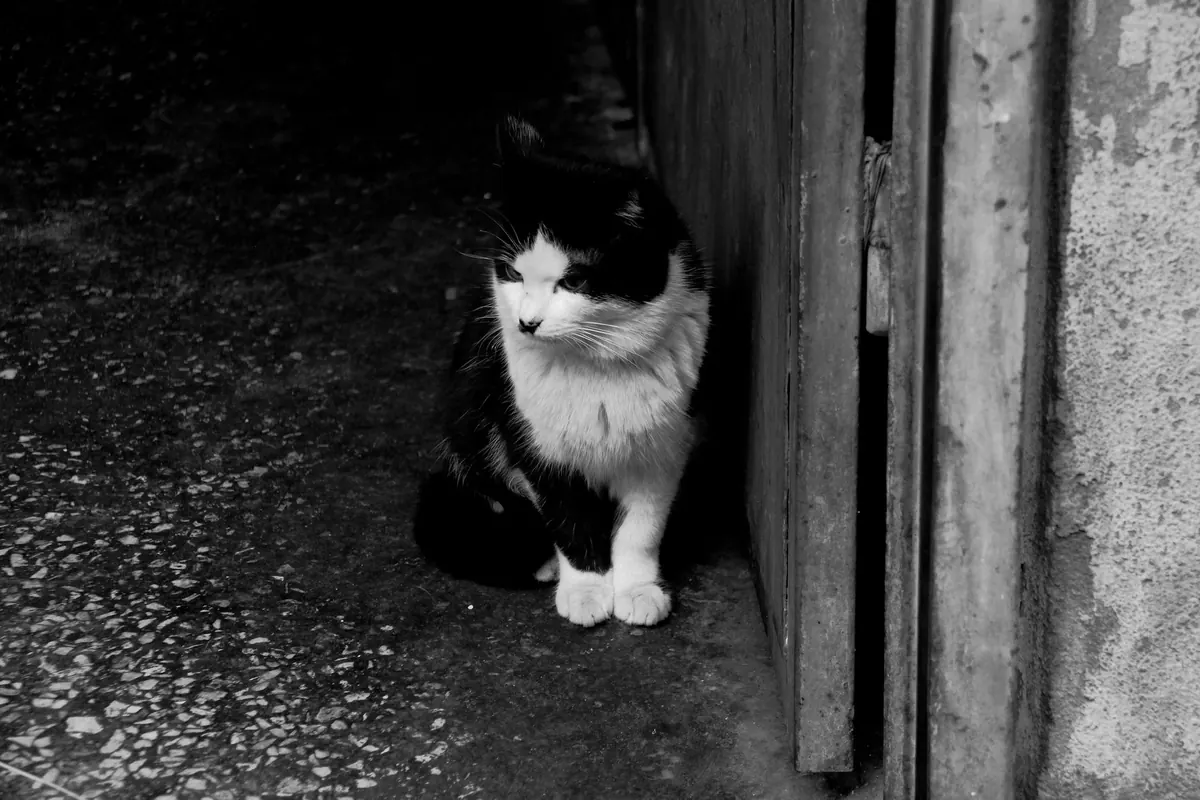
In Britain and parts of northern Europe, a black cat was a good omen. Sailors' families kept them, and a black cat aboard was said to help bring a ship home. In some fishing towns, a black cat on the doorstep was a sign that the catch would be good. In much of continental Europe, and later in Puritan-influenced places, the same animal turned sinister: it moved at night, its eyes caught the firelight, and it was convenient to link it to witches. A stray cat that a lonely woman fed became evidence of a compact with the devil, if you were already looking for one.
The contradiction is the interesting part. When two neighbouring villages hold opposite beliefs about the same animal, you're not looking at a fact about cats. You're looking at local identity, and at how a culture decides what to fear. Japan has its own version, where a black cat is often said to help you find a partner. In parts of the American South, a black cat crossing your path was once thought to signal good luck, provided you didn't panic. So if one crosses your path, pick whichever tradition suits the day.
Knocking on Wood: The Superstition Nobody Can Fully Explain
This is the one with no settled answer, which is probably why it has survived so well.
The most common account goes back to trees. In various folk traditions, spirits or gods were thought to live in wood, and touching a trunk was a way of asking permission, or saying thank you, before claiming good fortune out loud. A second strand is Christian: the wood of the cross, so a knock quietly requests protection.
There's a less romantic candidate too, in children's games. Watch kids claim something by touching it and you'll see the same logic at work. The gesture may have been about staking a claim as much as warding off fate. "Touched it first" is a legal system with no courts, and knocking on wood is the adult version.
What's clear is the timing rule. We knock on wood after saying something we want to be true: that we're healthy, that the job is safe, that this year has gone well. It's a hedge against tempting fate, and the fact that we do it with a fist suggests the ritual was never really about belief. It's about touching something solid to protect a sentence. Notice, too, that nobody knocks after bad news. The gesture is for the moment just after hope escapes your mouth.
Spilled Salt: A Pinch Over the Left Shoulder
Salt earned its mystique honestly. It preserved food, it sealed agreements in some cultures, and it was once valuable enough that wasting it counted as real carelessness.
The association with bad luck is the part that stuck. In Renaissance paintings of the Last Supper, artists placed a tipped salt cellar near Judas, a small visual tell for the traitor at the table. Spill your own salt and you had invited the same sort of trouble. In some households, the reasoning was less biblical and more basic: salt was expensive, it ruined a tablecloth, and spilling it in front of guests was embarrassing. A superstition is a memorable way to teach a child not to waste the expensive thing.
The remedy is the strangest detail in the whole catalogue: take a pinch in your right hand and throw it over your left shoulder. The reasoning is neatly symmetrical. The devil was said to hover over your left shoulder, so the salt was aimed at his eye. Your right hand does the work; your left side takes the hit. Some versions add a whispered phrase or a small prayer, but the gesture is the part that travels.
Modern kitchens have mostly dropped the devil and kept the flick. Sweep it up either way.
Walking Under a Ladder: Practical Sense Dressed as Superstition
Two explanations are usually offered, and both are old. The first is visual: a leaning ladder against a wall forms a triangle, and the triangle was a sacred shape, in Christian terms the Trinity. Pass through it and you broke the shape. The second is darker: a ladder against a wall resembles the old gallows, so walking beneath one meant walking under the dead.
Both may be afterthoughts. The plain reason is that ladders are dangerous, and the space underneath one is where dropped hammers land. The superstition did useful work: it kept people out of the drop zone without requiring a safety briefing. In that sense, it is the most practical item on this list, and the easiest to justify to a sceptical friend. You are not avoiding bad luck. You are avoiding a falling paint tin.
Why These Stories Stick
Look at the five together and a pattern appears. Most of them are not really about magic. They are about scarce resources, sharp edges, dangerous workplaces and the social cost of being careless. Salt was expensive. Mirrors were expensive. Ladders fall. Black cats were a way of sorting neighbour from stranger. Knocking on wood is a way of softening a boast before someone else hears it.
They also stick because they are easy to perform. A superstition that required an hour of preparation would have died out. A knock, a pinch, a step around the ladder: these fit into the body's routine without interrupting it. That is why you can do them before you have decided whether you believe in them.
And there is a social function, too. Superstitions are small pieces of shared culture. They mark you as someone's child, someone's neighbour, someone who knows the local rules. When you throw salt over your shoulder in a friend's kitchen, you are not making a theological statement. You are joining in.
A Quick Test Before You Knock, Flick or Salute
You don't need to stop. But it is worth knowing which of these are history, which are habit, and which are genuinely useful.
- Keep the useful ones. Walking around a ladder and being careful with broken glass are sensible precautions dressed in folklore. No harm done.
- Enjoy the stories. The seven years, the devil over your left shoulder, the Trinity in a ladder: these are good stories, and good stories are part of why the gestures survive.
- Don't let a gesture make a decision. A black cat should not decide whether you take a job, and a spilled salt cellar should not ruin a dinner. The ritual is a comma, not a full stop.
- Notice when you do it. The moment you catch yourself knocking on wood is the moment you can see the inheritance at work. That is more interesting than the superstition itself.
So go ahead and knock. Just know that the door frame has heard it before, from people who also could not quite explain why they were doing it.
Photo: betül / Pexels